
ERC-721 vs ERC-1155: Picking the Right NFT Standard
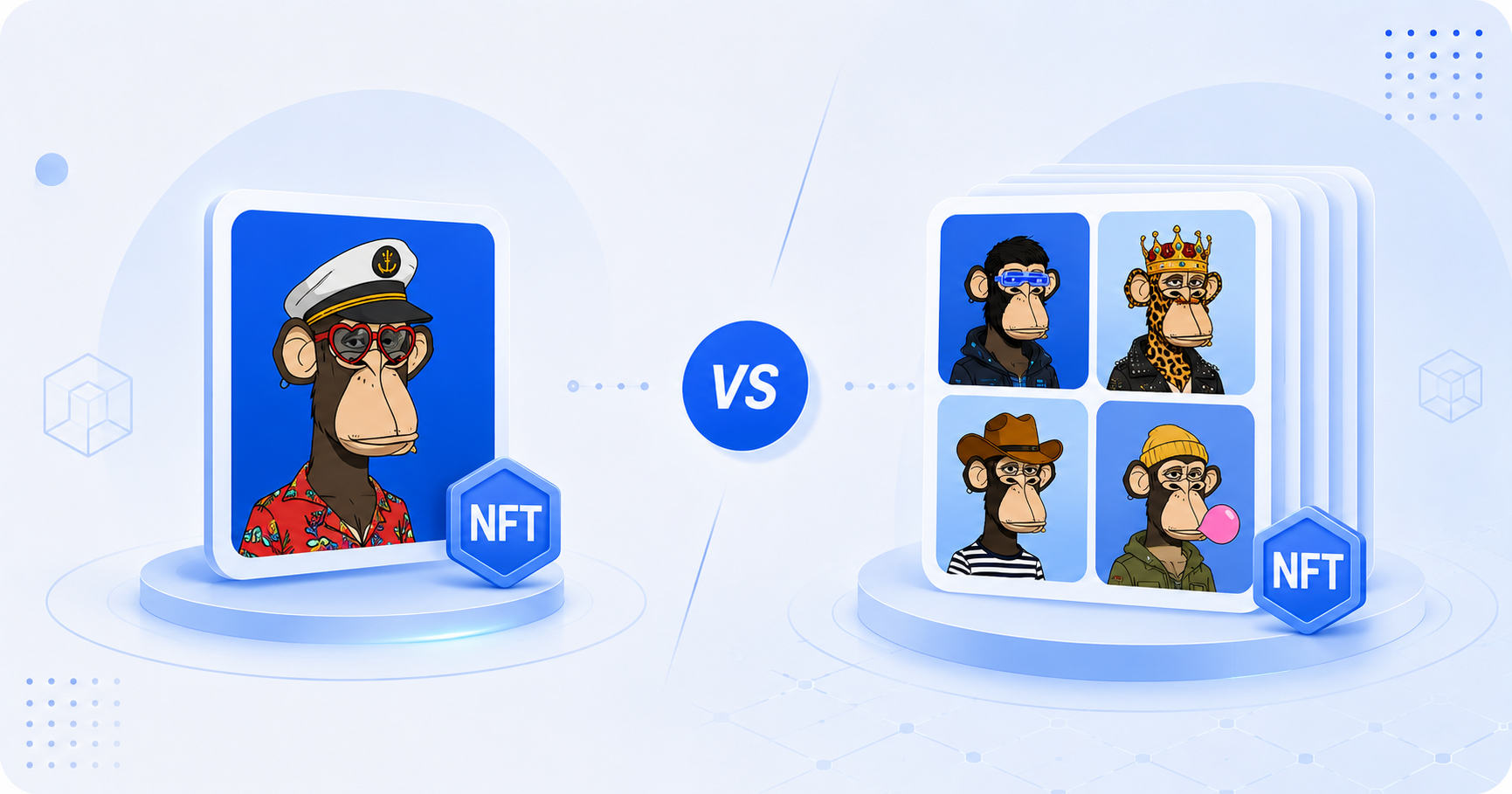
When you start an NFT project, you will hit a fork in the road: ERC-721 or ERC-1155? Pick the wrong one and you could limit your collection or overpay on gas. Here is how to choose, in plain language.
ERC-721: one-of-a-kind NFTs
ERC-721 is the classic NFT standard where every token is unique, with its own ID and metadata. It is perfect for art collections, PFP projects, and anything where each item is distinct.
ERC-1155: editions and efficiency
ERC-1155 lets a single contract manage many token types at once, including multiple copies of the same item. It is ideal for game items, memberships, or collections with editions, and it is more gas-efficient for minting in bulk.
Which should you pick?
If every NFT is unique and you want maximum marketplace compatibility, ERC-721 is the safe default. If you need editions, in-game items, or cheaper batch minting, ERC-1155 wins. Some projects even use both.
Not sure? I will guide you
My NFT contract and minting website service covers both standards, and I help you choose the one that fits your collection and budget. Start your NFT project.